Health & Safety Policy — Flat Clearance Paddington
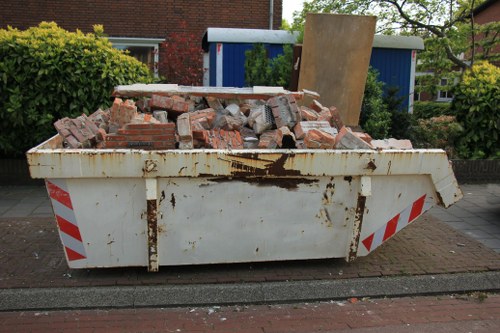 This Health and Safety policy sets out the commitment of our flat clearance operation in Paddington to protect the health, safety and welfare of staff, contractors, clients and the public while delivering professional rubbish removal and flat clearance services. The policy applies to every stage of a clearance job, from initial site assessment to rubbish uplift and disposal. Our aim is to minimise risks, prevent injury and reduce environmental harm through clear procedures and consistent practice.
To achieve these objectives we maintain a proactive management approach that integrates risk assessment, training, safe systems of work and regular review. Flat rubbish clearance in Paddington is undertaken with attention to manual handling, vehicle safety, and hazardous materials segregation. Employees are empowered to stop work if they believe an activity presents an unmanageable risk and to report hazards without fear of reprisal.
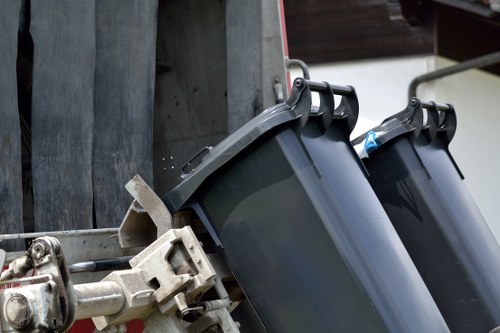 The core responsibilities of management and staff are summarised below, and supported by documented procedures and safe working instructions. These responsibilities ensure that every flat clearance or rubbish collection task is planned and executed safely:
Management responsibilities include providing adequate resources, ensuring competent supervision, maintaining plant and equipment, and keeping records of risk assessments and training. Management will also ensure that contractors and subcontractors used for rubbish removal and disposal understand and comply with this policy and any site-specific safety arrangements.
Worker responsibilities
Workers involved in paddington flat clearance activities must follow safe systems of work, use personal protective equipment (PPE), and complete any required training. Staff should report near misses and unsafe conditions promptly. Proper lifting techniques, use of trolleys and mechanical aids, and clear communication during bulky item removal are essential to reduce musculoskeletal injuries and incidents. Safe work practices include a written risk assessment for each job, a visual inspection on arrival, segregation of recyclables and hazardous waste, and ensuring clear access for vehicles. Where items are to be removed from upper floors, the use of staircasing procedures, protective coverings and robust manual handling plans is mandatory to protect operatives and residents alike.
Risk assessment and controls
All clearance projects start with a documented risk assessment that identifies hazards such as sharps, asbestos-containing materials, contaminated items, blocked access, and adverse weather. Controls are applied following the hierarchy of risk control: elimination, substitution, engineering controls, administrative actions, and PPE. This ensures rubbish collection and clearance tasks are executed with the lowest practicable risk.Examples of specific controls include secure wrapping of broken glass, immediate segregation and labelling of hazardous substances, use of mechanical lifting where possible, and traffic management where vehicles operate near public footways. Employees are required to follow permit-to-work systems for unusual or higher-risk tasks.
Training and competency form a critical part of our safety approach. Staff receive induction training, role-specific instruction for heavy equipment and vehicle operation, and refresher sessions. Records of training, licences and medical assessments are maintained to demonstrate competency for flat clearance and rubbish removal duties.
 Emergency procedures and incident reporting are clearly defined. First aid provision, emergency contacts, and steps to secure a scene after an accident are included in job briefings. All incidents, near misses and environmental spills are recorded and investigated, and corrective actions are implemented to prevent recurrence.
We also focus on vehicle and plant safety: service and inspection schedules, secure load containment during transit, appropriate use of tail lifts and ramps, and adherence to legal requirements for waste carriage and transfer. This reduces the likelihood of roadside incidents during rubbish collection or when transporting clearance materials to transfer facilities.
Employee wellbeing is promoted through job rotation, adequate rest breaks, hydration and provision of suitable PPE for the task. Mental health awareness and support mechanisms are available for staff exposed to stressful or distressing situations during overcrowded clearances or when encountering biohazards.
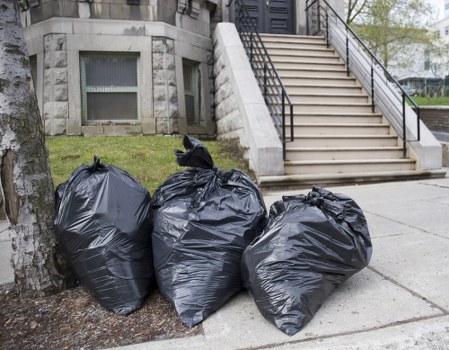 Monitoring, review and continuous improvement are embedded in our policy. Regular safety audits, performance indicators and feedback from teams ensure that safety measures remain effective and up to date. Lessons learned from incident investigations are shared across the organisation and incorporated into training and procedures for rubbish removal and flat clearance services.
Waste handling and environmental protection are integral to our commitments. We ensure correct segregation, reuse and recycling where possible, and lawful disposal of hazardous materials. Environmental controls are applied to prevent contamination during clearance work, and spill kits are available on-site for immediate response.
This Health and Safety policy is supported by documented procedures, safe systems of work and a clear chain of accountability. It will be reviewed periodically, or sooner if there are significant changes to operations, legislation or following an incident. By applying these measures, our paddington rubbish removal and flat clearance teams deliver a safe, compliant and professional service that protects people and the environment.